
The short answer: below are 16 illustrated before-and-after weight loss pictures of women, each with an illustrative story of how the change happened. The stories cover losses of about 12 to 70 pounds, most over a year or more, and none of them rely on a strict diet.
About these pictures and stories: every picture on this page is an AI-generated illustration, not a photo. The illustrations are based on real women who gave permission for their likeness to be used this way to encourage other women, and to protect their privacy none of them is named. Each story is an illustrative composite written to reflect common real experiences, not one woman’s own account.
16 women, 16 before and after pictures
1. The new mom who started with stroller walks

Age 31 · about 35 lb lost in 16 months
After her second baby, the weight she’d gained didn’t come off the way it had the first time. She was tired, eating whatever was fastest, and didn’t recognize herself in photos. She didn’t join a gym. She pushed the stroller around the neighborhood every morning and added short workouts at home during nap time. Breakfast became eggs and fruit instead of the kids’ leftovers. Some months the scale didn’t move, mostly when she was short on sleep, but the walks stayed.
The takeaway: Don’t wait until life calms down. Pick one thing you can do on your worst day and do that.
2. The accountant who stopped eating at her desk

Age 36 · about 28 lb lost in 10 months
Every tax season she gained a few pounds, and they never left. Most of her eating happened at her desk without noticing. She spent three months writing down what she ate, just to learn what normal portions looked like, then stopped logging. Sunday meal prep meant she had lunch ready instead of ordering in. She set a goal of 8,000 steps a day and took phone calls on her feet.
The takeaway: Tracking isn’t forever. A few months of it taught me more than years of guessing.
3. The serial dieter who quit starting over
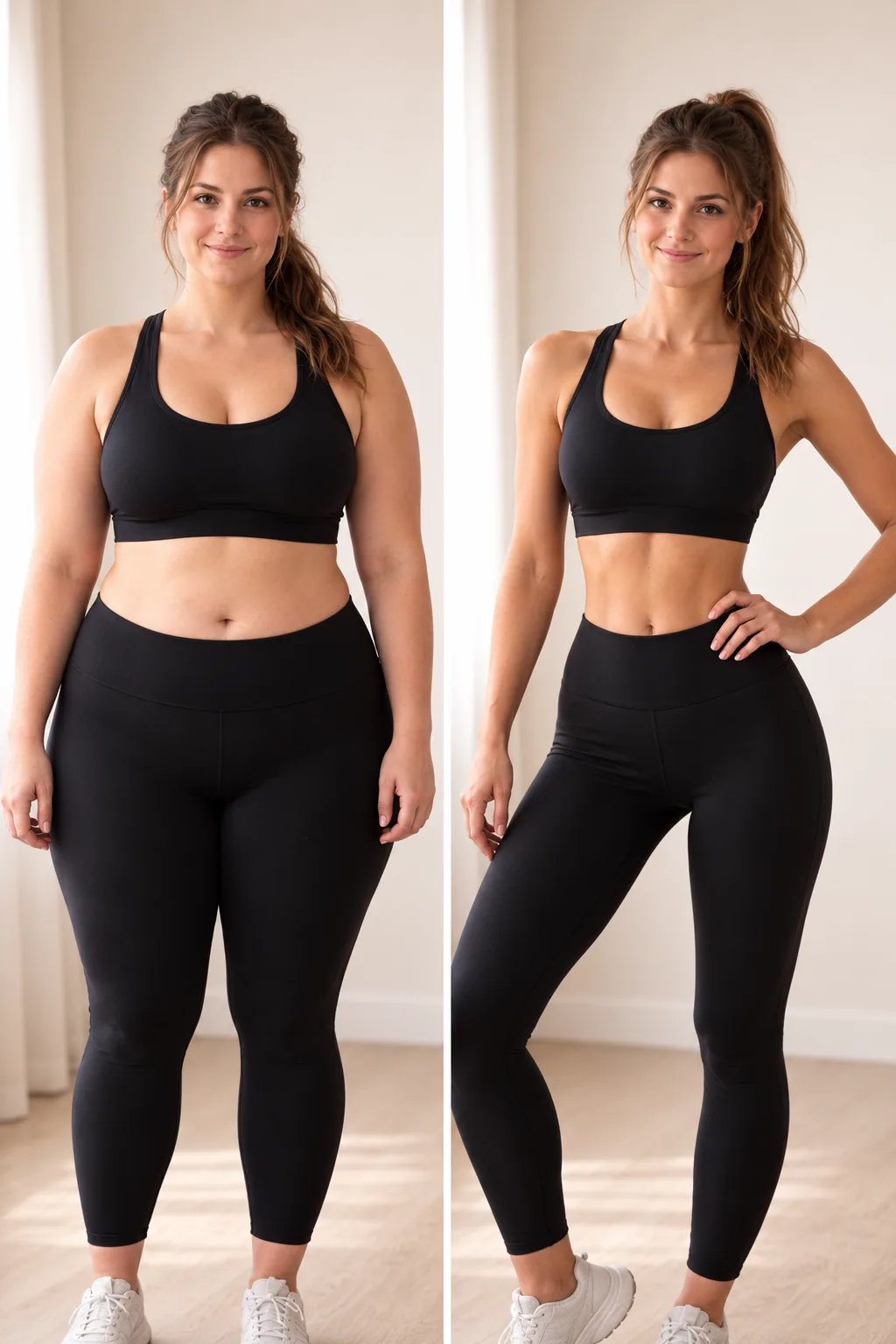
Age 29 · about 30 lb lost in 14 months
She had lost the same 15 pounds at least four times on strict plans, and gained it back every time. This time she made one rule: no plan she couldn’t follow for a year. That meant no banned foods, three strength workouts a week and a weekly weigh-in instead of a daily one. When she had a big weekend, she went back to normal on Monday instead of “starting over.”
The takeaway: The fastest plan you quit is slower than the slow one you keep.
4. The night-shift nurse who packed her own food

200 to 160 lb · about 40 lb lost in 20 months
Twelve-hour night shifts meant vending machines at 3 a.m. and fast food on the drive home. She started packing a cooler: a real meal, fruit and something crunchy for the slump. She lifted weights twice a week on her days off. A back injury set her back two months. Physical therapy got her moving again, and she says that is when she started to enjoy exercise. See what losing 40 pounds from 200 to 160 looks like at different heights.
The takeaway: Plan for your hardest hour of the day, not your easiest one.
5. The woman who worked with her doctor on PCOS

Age 27 · about 40 lb lost in 22 months
After years of trying on her own, she was diagnosed with polycystic ovary syndrome (PCOS), a common hormone condition. Her doctor referred her to a dietitian. Together they built meals around protein, vegetables and fiber, and she added regular walking and strength work. Progress was slower than she wanted, and some months it stalled. But her energy improved first, and the pounds followed.
The takeaway: If something feels off, get checked. The right help made every other change easier.
6. The bride who didn't want a crash diet this time

Age 32 · about 30 lb lost in 13 months
For her first engagement photos she crash-dieted, and the weight came back within a year. With her wedding over a year away, she went slowly. She ate the same foods, just less of them, cooked dinner at home most nights and took a dance class twice a week because it didn’t feel like a workout. She weighed herself every Friday and adjusted if the trend crept up.
The takeaway: A deadline is a great reason to start. Make sure the habit outlasts the date.
7. The 52-year-old who picked up a barbell

Age 52 · about 38 lb lost in 2 years
Menopause brought weight around her middle that her old habits didn’t touch. A friend talked her into a beginner strength class, and she was the oldest person there. She went three times a week, learned the lifts slowly and started eating more protein at every meal. Her grandkids were the reason she kept going. Two years in, she can carry them both up the stairs.
The takeaway: It’s not too late. Muscle is the best thing I ever started building.
8. The woman who started by cutting soda

240 to 180 lb · about 60 lb lost in 2½ years
She drank four or five sodas a day. Switching to sparkling water was her only change for the first two months, and it was enough to see the scale move. Then she added walking, then cooking more meals at home. Around month nine she hit a plateau that lasted almost three months. She kept her habits steady and it broke. She’s honest that the after picture doesn’t show everything: she has some loose skin, and she’s made peace with it. Here is what losing 60 pounds from 240 to 180 looks like.
The takeaway: Start with the change you’re sure you can keep. Stack the next one on top of it.
9. The woman who stopped eating her feelings

Age 35 · about 50 lb lost in 2 years
After her divorce, food was the one thing that made evenings feel better. She knew dieting alone wouldn’t fix that, so she started seeing a therapist. She began writing down how she felt before she snacked at night, and often found she was lonely or bored rather than hungry. Evening walks with a friend replaced the couch. The weight came off slowly, and she says the bigger change was in her head.
The takeaway: If you eat when you’re upset, a new diet won’t fix that. Look at what’s underneath.
10. The teacher who walked every lunch break

220 to 180 lb · about 40 lb lost in 18 months
At 44 she was out of breath on the stairs between classes. She and two other teachers started walking the school track for 20 minutes every lunch break, rain or shine. She swapped her afternoon vending-machine snack for one she brought from home and went to bed earlier. Having coworkers counting on her made it hard to skip. Here is what losing 40 pounds from 220 to 180 can look like.
The takeaway: Find someone who’ll notice when you don’t show up.
11. The non-runner who finished a 5K

Age 30 · about 25 lb lost in 9 months
She signed up for a beginner running plan because a friend did, fully expecting to quit. The first week was one-minute jogs between walking breaks. Nine weeks later she ran her first 5K, slowly. Running gave her a goal that wasn’t about the scale, and she started eating better because she wanted her runs to feel good. She still runs three mornings a week with a local group.
The takeaway: Train for something. It’s easier to keep going for a race than for a number.
12. The woman who fell for heavy lifting

Age 38 · about 55 lb lost in 2½ years
She lost her first 20 pounds with cardio and dieting, then stalled and felt weak. A coach at her gym suggested strength training. She started with light weights and built up over two years until she was lifting more than she ever thought possible. Her weight loss slowed while she built muscle. Her body shape kept changing anyway, and her clothes kept getting looser.
The takeaway: Stop chasing the smallest number. Chase the strongest version of yourself.
13. The camera-shy woman who tracked from behind

Age 33 · about 32 lb lost in 14 months
She hated seeing her face in photos, so she only took progress pictures from behind, once a month, in the same spot at the gym. She worked on lower-body strength and walked at least 30 minutes a day. Some months the scale barely moved, but the pictures showed change. Her favorite moment wasn’t a number. It was climbing a long hiking trail without stopping.
The takeaway: Take the pictures even if you never show anyone. You’ll be glad you have them.
14. The woman whose blood pressure was a wake-up call

Age 37 · about 70 lb lost in 3 years
At a routine checkup, her doctor told her that her blood pressure was high and that losing even some weight could help. She started cooking at home more and joined a walking group at her church. In the first year she lost about 20 pounds, and her doctor was already happy with her numbers. She kept going at her own pace. Three years later she’s down about 70 pounds and has more energy for her kids.
The takeaway: You don’t have to lose it all to feel better. The first 5 or 10 percent counts.
15. The busy mom who thought it was impossible

Age 34 · about 30 lb lost in 15 months
With three kids and a full-time job, every plan she found assumed she had hours to spare. So she made the steps tiny: drink water before each meal, put the phone away at 10 p.m. to sleep more, and do 15 minutes of exercise, even if it was in the living room with the kids climbing on her. On busy weeks she aimed to hold steady instead of losing. The small steps added up.
The takeaway: If it feels impossible, make the step smaller until it isn’t.
16. The woman whose scale barely moved

Age 40 · about 12 lb lost in 10 months
She didn’t have much weight to lose, so she was frustrated when the scale stayed stuck for weeks at a time. Her trainer told her to stop weighing daily and take monthly photos and measurements instead. She lifted weights three times a week and ate more protein. In ten months she lost only about 12 pounds, but she dropped two pants sizes, and her pictures show a different body.
The takeaway: The scale is one number. Your photos and your jeans tell the rest of the story.
What these stories have in common
These stories line up with what researchers saw in the National Weight Control Registry. This long-running study followed more than 10,000 people who lost at least 30 pounds and kept it off for a year or more. Its members had lost 66 pounds on average and kept it off for 5.5 years. Most of them were women. The registry has since stopped enrolling, and its members were people who succeeded, so they aren’t a typical sample. Still, their habits are a useful guide:
- They changed what they ate and how much they moved. 98% changed their eating and 94% became more active. Walking was the most common activity.
- 78% ate breakfast every day.
- 75% weighed themselves at least once a week. Not daily, but often enough to catch a trend early.
- 90% exercised about an hour a day on average.
- 62% watched less than 10 hours of TV a week.
- They ate the same way on weekdays and weekends. In one study of registry members, people who did were about 1.5 times as likely to stay within 5 pounds of their weight over the next year.
Notice what’s missing: no single diet. About half the registry members lost weight on their own, and the rest used a program.
What’s realistic for you
Pace. The CDC says losing about 1 to 2 pounds a week is the steady pace most likely to last. At that rate, 12 weeks is about 12 to 24 pounds. Every story above averaged a pound a week or less. If a before-and-after picture claims 50 pounds in three months, be skeptical.
Most people lose less than these stories show. In a large study called Look AHEAD, adults with type 2 diabetes in an intensive lifestyle program kept off about 6% of their body weight on average over four years. For a 200-pound woman, that’s about 12 pounds. That’s a real success, even if it doesn’t look like the biggest pictures here.
Small losses still count. The CDC says losing just 5% of your weight (10 pounds if you weigh 200) can improve blood pressure, cholesterol and blood sugar. In the Diabetes Prevention Program, losing 7% and being active 150 minutes a week cut the risk of type 2 diabetes by 58%.
Plateaus are normal. Most people lose faster early on and then slow down or stall, often within the first year. Several women above stalled for months and kept going.
The scale isn’t the whole picture. The CDC suggests muscle-strengthening activity at least two days a week. In a study of 140 women on a very-low-calorie diet, those who did strength training kept their muscle while the aerobic group lost some. Losing fat and gaining muscle at the same time is possible, which is why a photo can change more than the scale does.
If you have a health condition or a lot of weight to lose, talk with your doctor before you start.
How to take your own before-and-after pictures
Two of the women above leaned on photos when the scale stalled. These are common tips from fitness coaches for making your pictures easy to compare:
- Same place, same light. Stand in the same spot, ideally with daylight from a window and a plain wall behind you.
- Same time of day. Morning, before breakfast, is the easiest to repeat.
- Same clothes. Fitted workout clothes show change best.
- Front, side and back. Stand naturally: no flexing, no sucking in.
- Every two to four weeks. Daily pictures change too little to notice.
Keep your photos next to your weight and a waist measurement. When one stalls, the others often keep moving.
Want to see where you’re headed before you start? The Body Visualizer shows what your body could look like at a goal weight for your height. Or browse more before and after pictures by pounds lost.
Common questions
Are before and after weight loss pictures real?
Many are, but not all. Lighting, posture and photo editing can change how a body looks, and some pictures are fully AI-generated, like the illustrations on this page. Be wary of any picture that claims a huge change in a few weeks.
How much weight do you need to lose to see a difference in photos?
There’s no set amount. It depends on your height and starting weight. The Body Visualizer can show you what a given loss might look like on a frame like yours.
Will I have loose skin after losing weight?
It depends on how much you lose, your age and your skin. It’s most common after very large losses: in one study of women after weight-loss surgery, more than 70% had excess skin. It doesn’t mean you did anything wrong, and a doctor can talk you through options if it bothers you.
Should I share my before and after pictures?
Only if you want to. Some people find posting them keeps them accountable; others keep them private. Either way, your “before” picture isn’t something to be ashamed of. It’s where you started.
Sources
- CDC: Steps for losing weight
- CDC: Physical activity guidelines for adults
- NIDDK: Diabetes Prevention Program
- National Weight Control Registry: Research findings (archived)
- National Weight Control Registry: About the registry (archived)
- Gorin et al.: Consistent eating and weight maintenance, Int J Obesity 2004
- Look AHEAD Research Group: four-year results, Arch Intern Med 2010
- Hall and Kahan: Maintenance of lost weight, Med Clin North Am 2018
- Hunter et al.: Racial differences in relative skeletal muscle mass loss during diet-induced weight loss in women, Obesity 2018
- Barakat et al.: Body recomposition, Strength Cond J 2020
- Baillot et al.: Excess skin after bariatric surgery, 2013
- MacroFactor: Tips for taking good progress photos